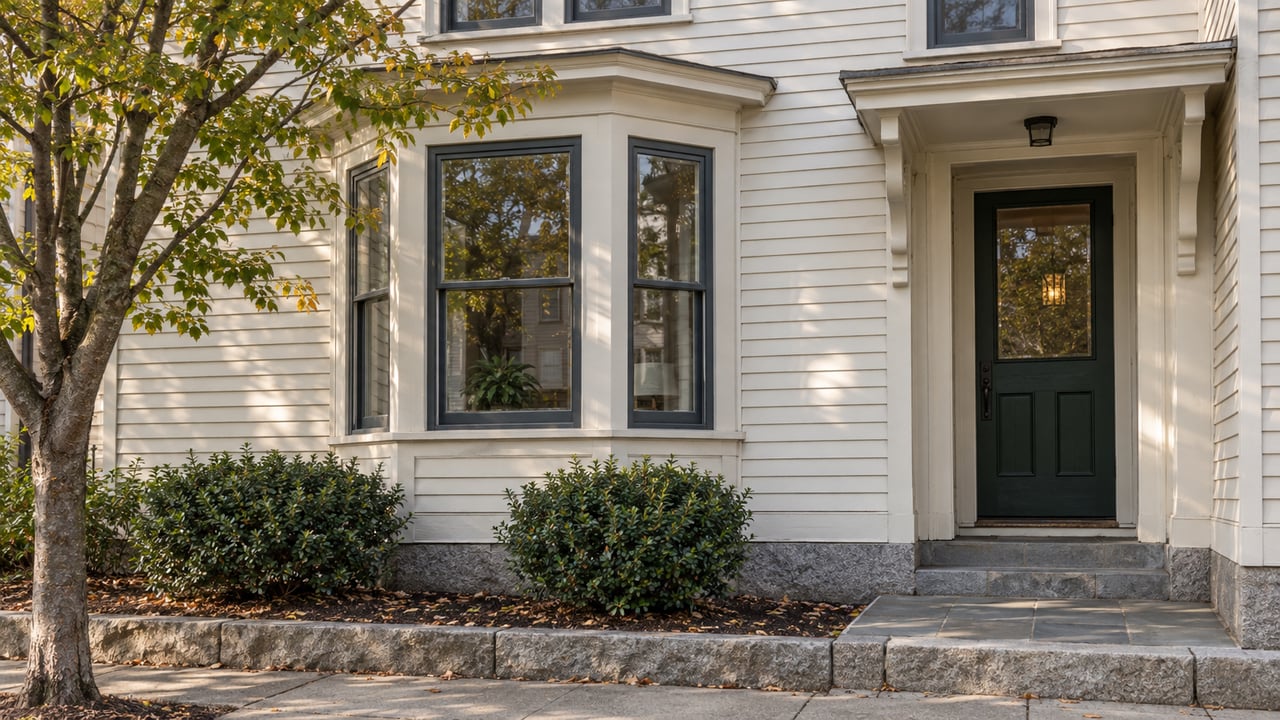
Malden Zoned Room for 6,930 New Homes Near the T. So Far, Prices There Went Up First.
October 1, 2026
October 1, 2026
If you're comparing Malden to another Orange Line town this fall, you've probably seen the same pitch: the city rezoned around its two rapid transit stops, so more supply is coming, and more supply should eventually mean better prices for buyers. The zoning is real. The math on prices, so far, runs the other way.
Malden Center, the specific neighborhood sitting inside the new zoning, posted a median sale price of $665,000 in July 2025, up 26.7% from a year earlier, with price per square foot up 63.6% over the same stretch. That's not a typo and it's not a fluke reading from a thin month of sales. It's the submarket closest to the T getting more expensive just after the zoning that was supposed to eventually add supply there had been finalized by the state.
Malden's City Council voted 10-1 in December 2023 to adopt a zoning overlay built around its two rapid transit stations, Malden Center on Commercial Street downtown and Oak Grove Station at Washington and Winter Streets. The overlay carved out six subdistricts, including a Malden Center Subdistrict along streets like Pleasant, Exchange, Florence and Commercial, a separate Malden Center High-Rise Subdistrict, and an Oak Grove Subdistrict along Main and Summer Streets, as Advocate News reported. Together, the zoning brought the city's by-right multifamily capacity to 6,930 units, according to the city of Malden.
The city surveyed residents before finalizing the plan. Of 1,529 responses, 54% said they didn't want to see more multifamily housing built in Malden. The zoning passed anyway, because Massachusetts law requires it. But that split matters for anyone trying to guess how fast the zoned capacity actually turns into finished buildings, since local sentiment shapes permitting timelines even when a project is technically allowed as of right.
The zoning itself took longer to lock in than the initial 2023 vote suggested. The state gave Malden only conditional compliance in November 2024, flagging two problems: a hard cap of 1,582 units inside one subdistrict called MCMOD-MD1, and a clause tying the ordinance's effective date to final state approval, which created a circular condition, as Advocate News reported. The City Council fixed both in June 2025, and the state confirmed Malden fully compliant with Section 3A on June 11, 2025, per city records. That's a year and a half between the initial vote and a zoning ordinance the state would actually sign off on.
The 6,930 figure describes capacity, not construction. The most recent, concrete example of what's actually landing inside the rezoned area is a lot smaller than the headline number suggests.
According to the City of Malden, the Planning Board approved a special permit at 2 Florence Street, inside the Malden Center Subdistrict, on July 22, 2026, to convert vacant commercial space into one additional residential unit.
That's the texture missing from most conversations about MBTA Communities zoning: even inside a subdistrict built specifically to allow multifamily housing as of right, the project that actually reached a decision this year was one unit. A January 2026 report from Boston Indicators, reviewing the statewide MBTA Communities pipeline, found the same pattern across the region: most projects entering the pipeline are what planners call "missing middle," under 10 units each, and only about 30% of units in the pipeline sit within a half-mile of an actual train station, despite the law's name. Malden's numbers so far are consistent with that statewide picture rather than an exception to it.
Pull Malden's home price data from different sources and you'll get six different price measures depending on the geography and time window each one covers.
| Source | Geography | Time Window | Metric | Result |
|---|---|---|---|---|
| Redfin (neighborhood-level) | Malden Center only | July 2025 | Median sale price | $665,000, up 26.7% year over year |
| Redfin (neighborhood-level) | Malden Center only | July 2025 | Price per square foot | $602, up 63.6% year over year |
| Redfin (citywide, all home types) | All of Malden | June 2026 | Median sale price | $764,584, up 20.8% year over year |
| Redfin (citywide, single-family) | All of Malden | February 2026 | Median sale price | $493,000, down 16.5% year over year, on 15 homes sold |
| Movoto (citywide listings) | All of Malden | June 2026 | Price per square foot | $418, down roughly 6-7% year over year |
| Zillow Home Value Index | All of Malden | Mid-2026 | Typical home value | $613,378, up 1.7% year over year |
None of these figures is wrong. They're measuring different slices of a small city with a low monthly sales count, which means the mix of what happens to sell in any given month, more condos one month, more single-family homes the next, can swing the citywide median by six figures without any underlying shift in value. Fifteen single-family sales in a month is not a sample size that tells you much on its own.
The one number in that table that isn't noisy is the Malden Center neighborhood figure. It's a narrower geography, it moves in one direction across both price and price per square foot, and it sits precisely inside the rezoned subdistrict.
That's worth sitting with, because it cuts against the assumption a lot of buyers bring to upzoning stories. The usual logic is that more allowed density eventually means more units, and more units eventually means softer prices. What the Malden Center data shows instead is land and property values responding to the zoning change before a single large project has broken ground. A parcel that can now legally support a multifamily building is worth more today than the same parcel was worth as a single-family lot, regardless of whether anyone has pulled a building permit yet. Combine that with a permitting pipeline still dominated by one-unit special permits and a resident base that was split against more multifamily housing in the survey, and the near-term supply response looks slow, while the value of being inside the zone looks fast.
If you're weighing Malden against another North Shore or Greater Boston commuter town, the zoning story is real, but the timeline matters more than the headline unit count.
If you're buying inside Malden Center or near Oak Grove Station now, expect to pay a premium that already reflects the zoning, not a price that's waiting to be discounted by future supply. The Malden Center data through mid-2025 shows that premium building, not shrinking.
If you're underwriting a rental purchase anywhere in Malden, use current asking rents and current permit activity rather than the 6,930-unit capacity figure. That number describes what the city legally allows, not what's likely to exist in the next two or three years. The Florence Street case shows the pace at which individual projects are actually clearing local review even inside a fully compliant subdistrict.
If your plan depends on Malden becoming meaningfully more affordable because of this zoning, the statewide pattern Boston Indicators documented, small projects, slow pace, uneven proximity to transit, suggests that's a multi-year bet, not a near-term one.
Does Malden's new zoning guarantee thousands of new units will get built? No. The 6,930 figure is by-right capacity, meaning a developer no longer needs a special permit or variance to build multifamily housing in those subdistricts. It's not a construction commitment, and the one project that reached a Planning Board decision in the Malden Center Subdistrict this year added a single unit through the older special permit process.
Which streets are actually inside the rezoned area? The Malden Center Subdistrict runs along streets including Pleasant, Exchange, Commercial, Florence, Pearl and Washington near Malden Center Station. The Oak Grove Subdistrict covers streets including Main, Summer and Maple near Oak Grove Station. If a listing sits outside those boundaries, the new by-right zoning doesn't apply to it, even if it's a short walk from the T.
Will prices near the T eventually come down as more units get built? That depends on whether the pace of construction picks up from where it stands now. Nothing in the current data points to a near-term drop. The neighborhood closest to the zoning change has moved up, not down, through the most recent period with clean, single-geography data.
Comparing Malden to another town on paper is easy. Comparing what a specific parcel inside or outside these subdistricts is actually worth right now takes a closer look at the block, not just the zoning map. If you're weighing a purchase near either station, The Caceda Team can walk through what a specific Malden address is actually zoned for and what that's likely to mean for its value over the next few years.
This article is general information, not legal, tax or financial advice. Consult a qualified professional about your situation.
Stay up to date on the latest real estate trends.


The Caceda team strives to get their clients into a home they want to buy, not a property they just need to buy. Their knowledge and experience give them a distinct advantage in helping clients purchase their dream homes.