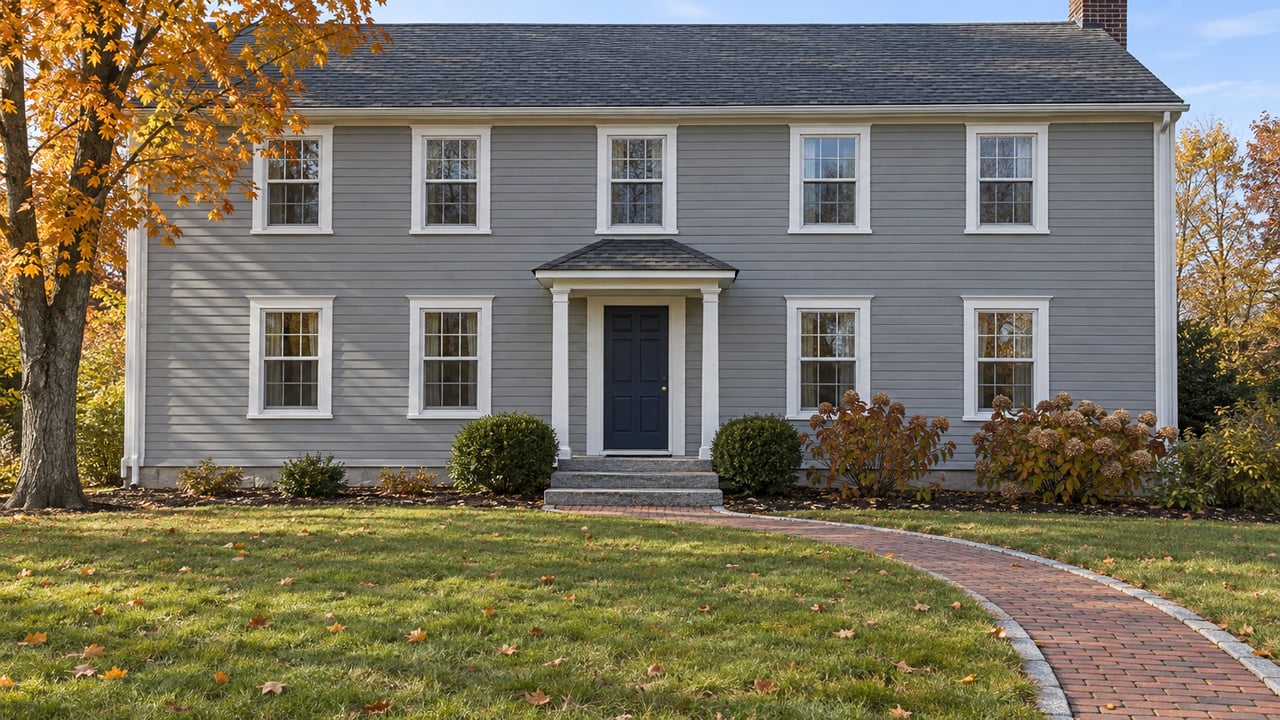
Peabody's Electric Bill Runs on a Different System. So Do Its Heat Pump Rebates.
October 29, 2026
October 29, 2026
On federal data for 2024, a Peabody household paid an average of 15.71 cents per kilowatt-hour for electricity. Across the city line in Lynn, Salem, Saugus or Beverly, the average National Grid customer in Massachusetts paid 33.60 cents. Two homes with the same list price can cost very different amounts to run, and listing pages don't show that.
There is a catch on the Peabody side. The same arrangement that keeps the monthly bill low also shuts Peabody electric customers out of the state's largest heat pump rebate program. As a buyer, you are choosing between a smaller bill every month and a bigger check once, at renovation time. Both programs have deadlines between now and the end of January.
Peabody is one of a handful of North Shore communities with its own electric utility. The Peabody Municipal Light Plant, known as PMLP, calls itself "Community Owned. Not for Profit." National Grid's Massachusetts Electric territory includes Beverly, Lynn, Salem and Saugus. PMLP also serves South Lynnfield, according to its own tariff language. Lynnfield Center is served by a different municipal utility, the Reading Municipal Light Department. In Lynnfield, the street address decides which bill you get.
The U.S. Energy Information Administration's 2024 residential sales table shows how that sorts out across the region:
| Utility | Type | 2024 average residential price |
|---|---|---|
| City of Peabody | Municipal | 15.71¢/kWh |
| Town of Reading | Municipal | 15.86¢/kWh |
| Town of Danvers | Municipal | 16.45¢/kWh |
| NSTAR Electric | Investor-owned | 29.91¢/kWh |
| Massachusetts Electric Co. | Investor-owned | 33.60¢/kWh |
These are annual averages: total revenue divided by total sales for the year. They are not the rate printed on any one bill. For this winter, National Grid's published fixed supply rate is 17.185 cents per kWh for August 2026 through January 2027. Its delivery charges, in effect since March 1, 2026, add 22.012 cents per kWh plus a $10 monthly customer charge. Together that is about 39.2 cents per kWh before the customer charge. PMLP's spring 2026 newsletter said its electric rates "will remain unchanged," and it reminded customers of a 20% prompt payment discount.
You might expect a utility price gap to shrink as markets adjust. The record shows the opposite. The Massachusetts Municipal Wholesale Electric Company compares a 750 kWh monthly bill each year across its member light plants and the state's investor-owned utilities. In MMWEC's table, the average National Grid bill was 44% higher than the member average in 2015. By 2023 it was 112% higher, and in 2025 it was 96% higher, at $268 a month against $137.
That $137 is an average across many municipal utilities, not a Peabody figure. Still, the direction holds across the decade: over time, the cost of running a home in a municipal-power town has fallen further behind the cost in a National Grid town. Over a typical ownership period, that gap adds up to real money.
Residents notice it. In an April 2026 reader roundup from Boston.com, a Peabody reader credited the city's light department with keeping electricity costs lower, and a Danvers reader said their municipal bill was half what they had paid National Grid for the same usage.
The other side shows up when an owner replaces a boiler or furnace with heat pumps. Mass Save's 2026 whole-home air-source heat pump rebate pays $2,650 per ton, up to $8,500. The program lists its electric sponsors as Cape Light Compact, Eversource, National Grid and Unitil. PMLP is not on that list.
PMLP runs its own program, administered through NextZero. It pays $500 per ton for qualifying air-source heat pumps and $750 per ton for ground-source systems, with a limit of 3 tons per year. At that cap, an air-source project tops out at $1,500 in a single year. The same work in Salem or Lynn could qualify for up to $8,500 through Mass Save.
There are two partial offsets. Mass Save allows some heat pump rebates through a household's gas account, and National Grid is among its eligible gas sponsors, so a Peabody home with National Grid gas service may have a path there, subject to the program's conditions. On financing, NextZero offers an MLP Z-Loan for homes on municipal electric or gas service that are not eligible for Mass Save. It goes up to $25,000 with a maximum term of five years.
PMLP has put numbers on the trade itself. Keep in mind who did the math. In its Spring 2025 newsletter, the utility modeled a heat pump home using 12,000 kWh a year. It estimated about $4,215 a year on National Grid and about $1,908 on PMLP, after subtracting a $10,000 rebate on the National Grid side and a $1,200 rebate on the PMLP side.
PMLP's modeled totals, with the rebates already subtracted:
| Years in the home | National Grid | PMLP | Difference |
|---|---|---|---|
| 5 | $11,075 | $8,340 | $2,735 |
| 10 | $32,150 | $17,880 | $14,270 |
| 15 | $53,225 | $27,420 | $25,805 |
| 20 | $74,300 | $36,960 | $37,340 |
The five-year row matters most. Even when the National Grid home starts with a rebate $8,800 larger, the Peabody home is ahead by year five in PMLP's model, and the lead keeps growing after that. The model is PMLP's own, built on 2025 assumptions, and the rebate figures it used differ from the 2026 amounts above. What holds up is how the comparison works. The rebate is paid once. The rate difference repeats every month.
That has a practical meaning for buyers. If you expect to stay in a home a short time and plan a full heat pump conversion right away, the larger rebate in a National Grid city carries more weight. If you expect to stay longer, the monthly rate difference matters more, because the rebate stays the same size while the bill savings keep adding up.
Both programs change around the new year, so the timing of a purchase or project this winter can move the numbers:
On the Mass Save side, the window covers installation. On the PMLP side, it covers the purchase date. A buyer closing in December on a home in either kind of city would face those two deadlines differently.
Once you are comparing actual addresses, the utility question becomes a due diligence item:
PMLP is also testing a different approach. Its HomeAdvantage pilot, approved by the Peabody Municipal Lighting Commission, pays for qualifying upgrades such as heat pumps, heat pump water heaters and insulation, and the customer repays through a monthly charge on the electric bill. The pilot is limited to 5 to 10 customers.
Rebate and loan terms change, and eligibility depends on the household. Treat this as general information, not financial or tax advice, and confirm the details with the program and a qualified professional before you commit.
PMLP's last base rate change was a net 9.1% increase effective April 1, 2024. At the time, the utility said it aimed to keep base rates level for five years. A separate fuel charge adjusts quarterly. Its spring 2026 newsletter said rates would remain unchanged.
Massachusetts places residential basic service customers on a six-month fixed price by default. The current fixed period runs through January 31, 2027, so a new supply rate takes effect in February.
PMLP announced a one-time summer 2026 residential credit of $50, $125 or $275, depending on usage. Most credits were expected on bills delivered in August.
If you're weighing a home in Peabody against one in Lynn, Salem or Saugus, The Caceda Team can help you look at what each house costs to own and run, beyond its price. Paul's background in appraisal and residential construction makes heating systems and utility bills part of how we assess condition and value. Start with a free home valuation, and we'll go through the numbers with you, step by step.
Stay up to date on the latest real estate trends.

The Caceda team strives to get their clients into a home they want to buy, not a property they just need to buy. Their knowledge and experience give them a distinct advantage in helping clients purchase their dream homes.